See why each mark was awarded or lost
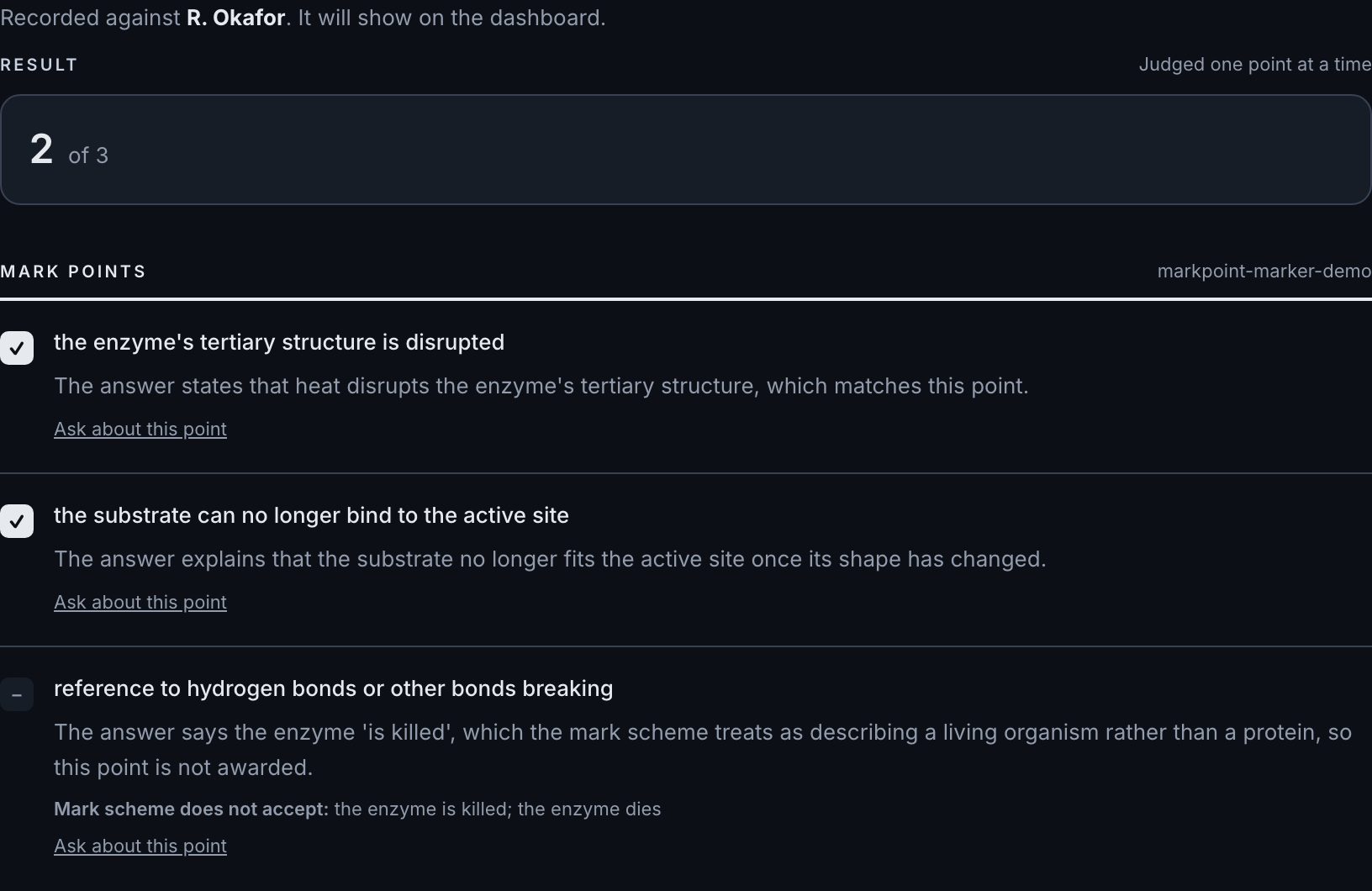
See why an answer lost a mark.
Each mark point is checked separately. If an answer is not accepted, students and teachers can see the mark-scheme reason.
Past-paper search and marking
Find related questions across the corpus, see where they appeared and how often they recur, and check every citation. Then mark a student's answer one mark point at a time against the mark scheme.
Search, counts and citations are database queries, not model guesses.
Every dot is a paper with a citation you can check.
Three tiers, never one total. A single number would flatten "worth preparing together" into "similar", and those are different claims.
Real citations from the corpus. Every one of them came out of a SQL join, and no language model is permitted to produce a year, a paper, a variant or a question number anywhere in this product.
Sixteen years of papers are joined in the database, so teachers and students can see which questions genuinely recur and which only look familiar.
Mark schemes often say exactly why a plausible answer should not earn a mark. markpoint keeps that guidance beside the decision, so students and teachers can see what needs to change.
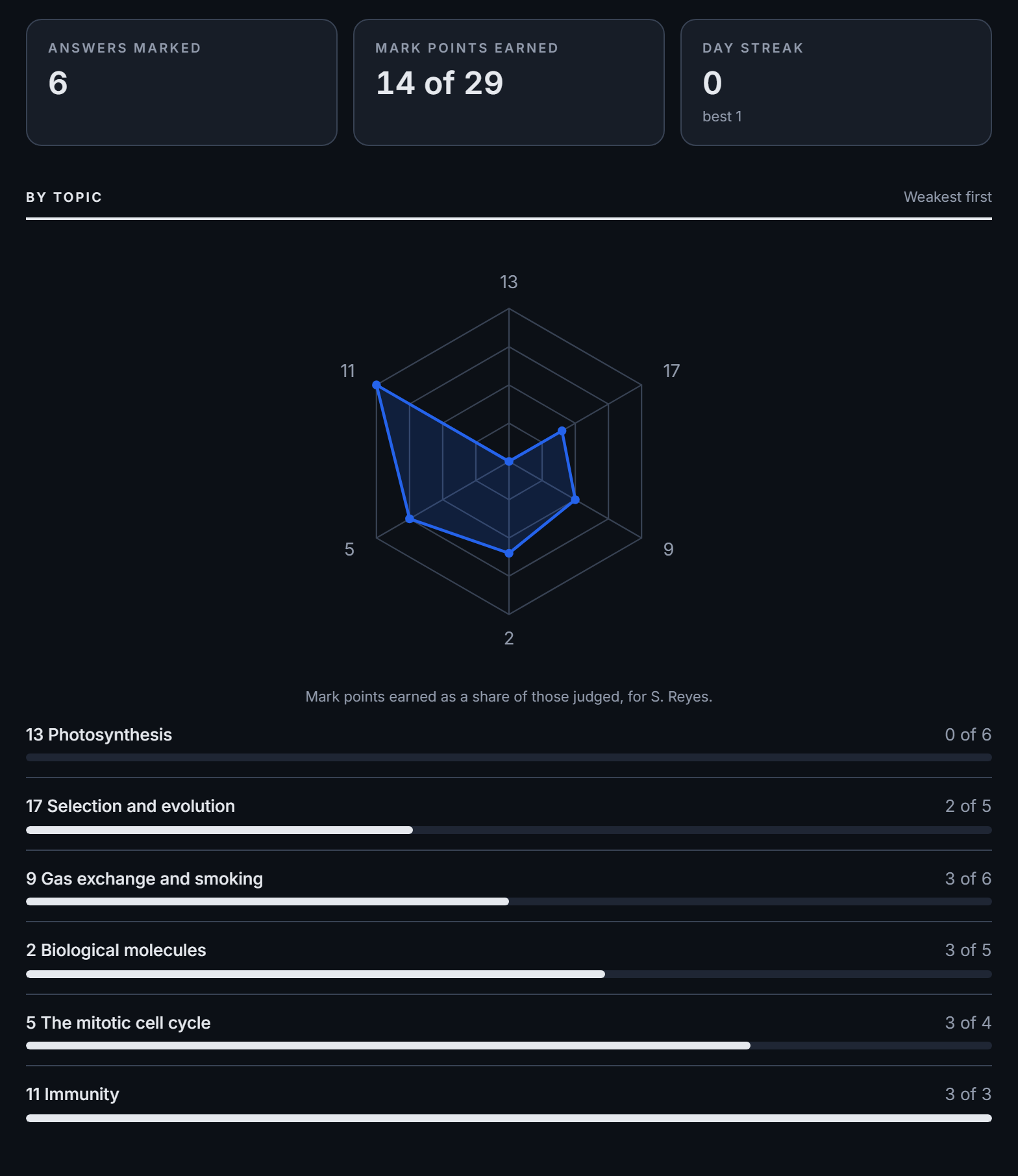
Questions, mark totals and citations come from the corpus. A paper prepared for a class reflects the questions selected, rather than newly generated "exam-style" content.
Counted from the corpus on 14 September 2026. These are current records, not targets or claims about student outcomes.
Cambridge International Biology 9700 today, Papers 1, 2 and 4. Practical papers are out of scope.
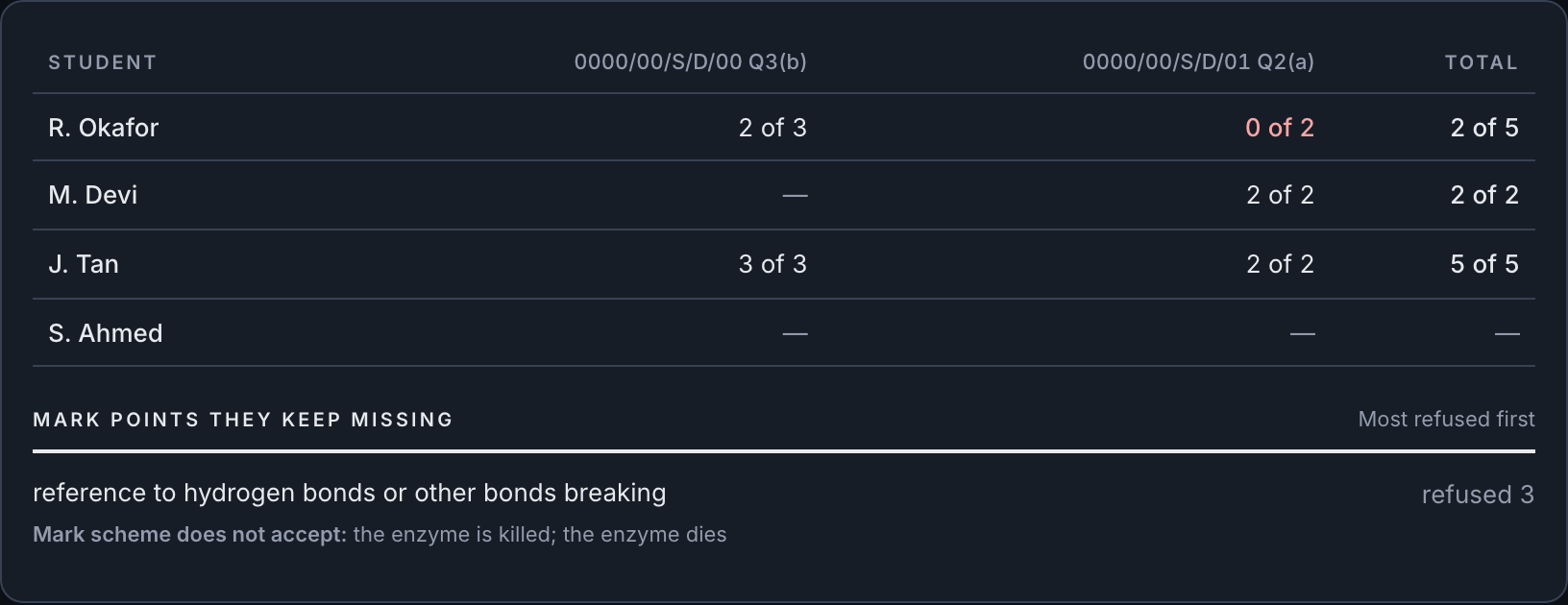
Each mark point is awarded or refused separately. Students and teachers can see what has been missed, topic by topic.
For a department
For a student
See why each mark was awarded or lost
Each mark point is checked separately. If an answer is not accepted, students and teachers can see the mark-scheme reason.
Build a paper from past questions
Choose the questions you want. Their marks, citations and print-ready layout come with them.
See what a class needs next
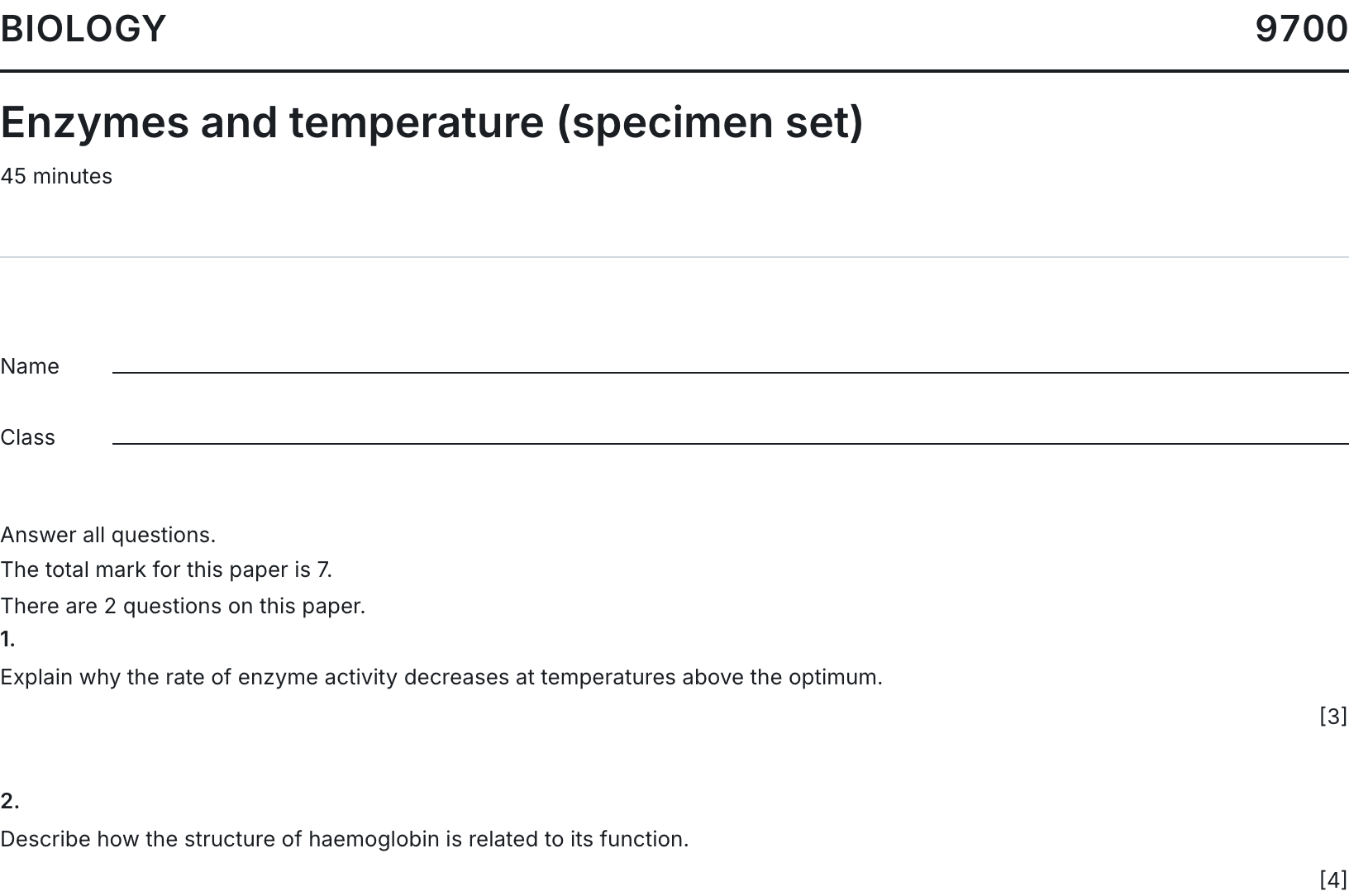
The gradebook separates no attempt from an incorrect answer. It also shows the mark points the class misses most often, so the next lesson can focus on something specific.
Practice where it matters most
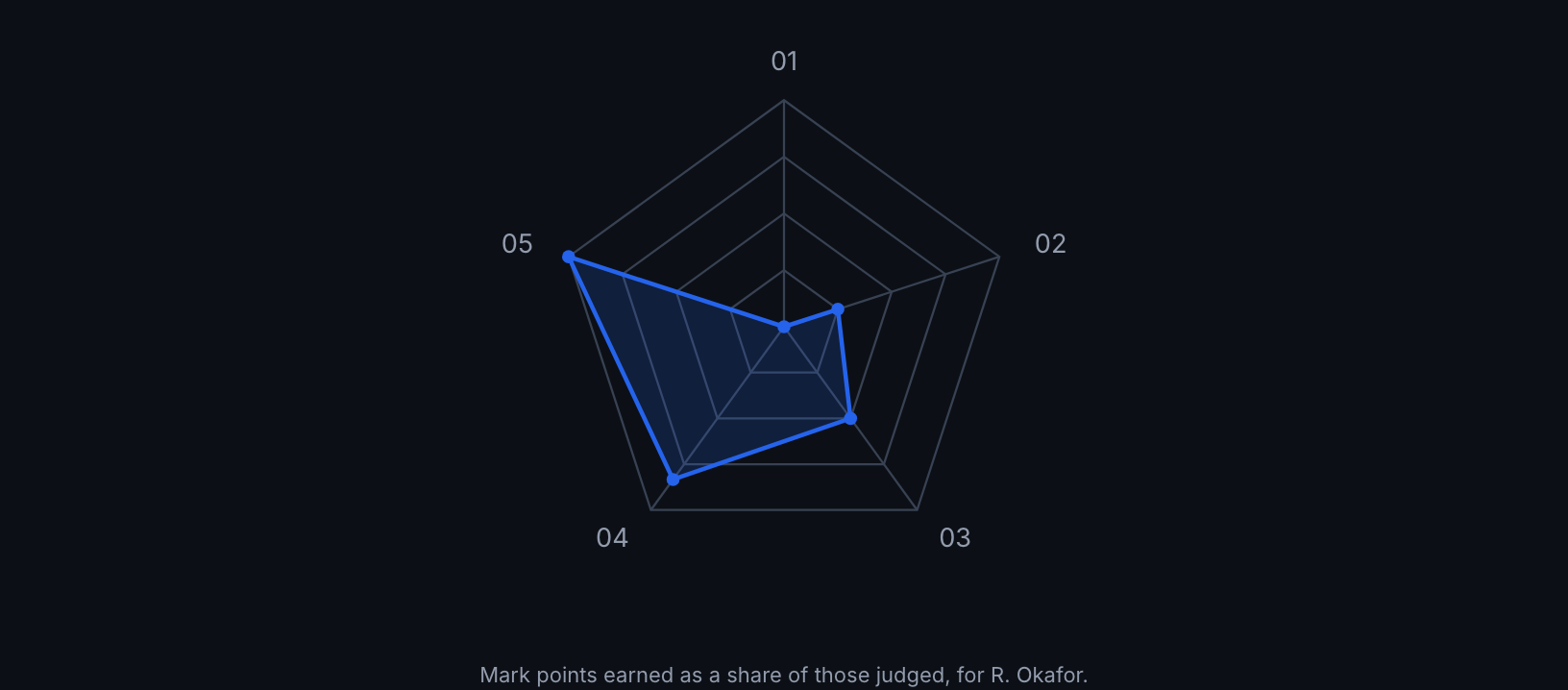
The chart shows the share of available mark points earned in each topic. It puts the weakest topics first, so students know where to focus next.
Find questions worth practising together
Markpoint first finds possible matches across the corpus, then ranks the strongest ones by the mark points they share.